
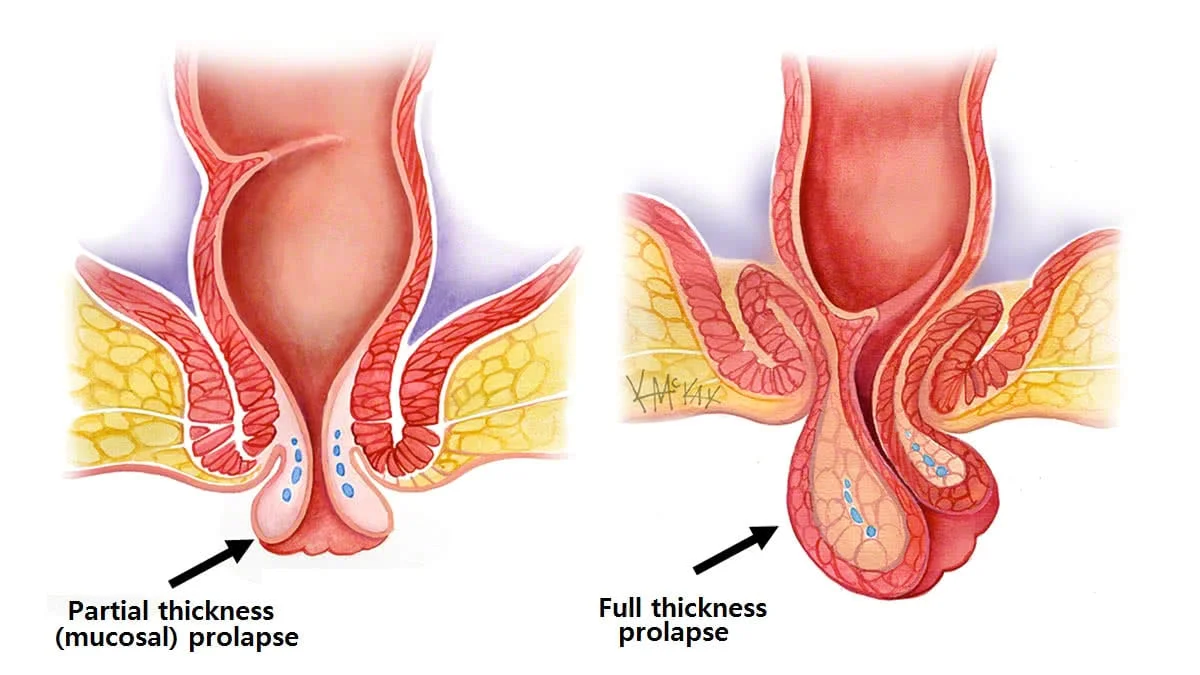
Rectal prolapse occurs when the rectum (the last part of the large intestine) slips or protrudes through the anus. It can be partial or complete and is more common in elderly individuals, women after childbirth, or people with chronic constipation or weakened pelvic muscles.
Treatment varies depending on the severity, age, general health, and whether the prolapse is internal or external.
Physical Examination: To identify visible prolapse or protrusion during straining.
Rectal Exam: To assess tone and muscle strength.
Colonoscopy or Sigmoidoscopy: To rule out tumors, polyps, or other bowel conditions.
Defecography (X-ray or MRI): To see how the rectum moves during bowel movements.
Manometry: Measures rectal pressure and sphincter function (for chronic cases).
Recommended only for very early-stage or internal prolapse (rectal intussusception) without severe symptoms:
Dietary Modifications: High-fiber foods and hydration to prevent straining.
Stool Softeners or Laxatives: To ease bowel movements.
Pelvic Floor Therapy / Kegel Exercises: To strengthen anal and rectal muscles.
Biofeedback Therapy: For patients with rectal dysfunction or chronic constipation.
?? Non-surgical treatments only manage symptoms—they do not cure rectal prolapse.
Surgery is the definitive treatment for most moderate to severe rectal prolapse cases.
The rectum is repositioned and secured inside the pelvis using sutures or mesh.
Can be done via laparoscopic (keyhole) or open surgery.
Often combined with resection (removal of a redundant colon segment) if constipation is a major symptom.
Done through the anus, no abdominal incision required.
Altemeier Procedure (Perineal Rectosigmoidectomy): The prolapsed rectum is removed through the anus.
Delorme Procedure: Inner lining of the rectum is removed and outer muscle tightened.
Less invasive but higher recurrence rate compared to rectopexy.
Advanced and minimally invasive options
Less postoperative pain, faster recovery
Preferred for younger and healthier patients
Wound care and pain management
Constipation prevention and bowel training
Pelvic floor physiotherapy
Dietary and lifestyle counseling
Regular follow-up appointments to check for recurrence or complications
Pre-surgical fitness and anesthesia evaluation
Day-care admission for laparoscopic surgeries
Cashless insurance and claim processing
Private recovery rooms
Online follow-up consultations
24/7 emergency surgical team availability
© Copyright 2025 Suraj Hospital All Rights Reserved. Design by Blubuzz Media